
The tuk tuk driver doesn’t blink when the passenger gives directions in Thai. Three women in crisp office skirts board a BTS car, one checking her phone, another adjusting her blazer, the third leaning into her girlfriend’s shoulder as the train rattles toward Thong Lo. No one stares. A few stops later, a foreigner in a rumpled linen shirt steps off at On Nut, heading toward a studio apartment that costs a third of what his friends pay in Singapore. In the same morning, across town, a penthouse changes hands for 250 million baht.
This is Bangkok 2026. And the numbers no longer make sense.
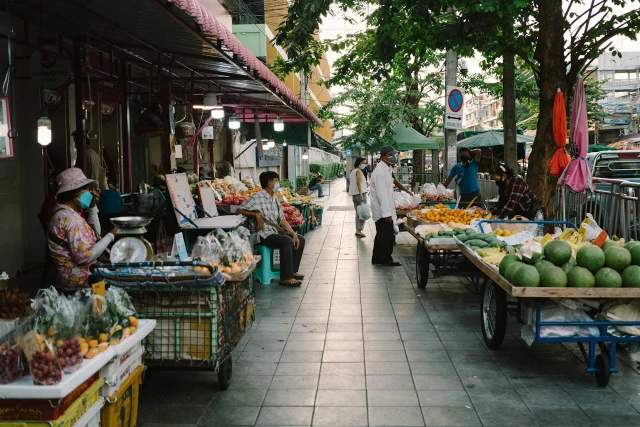
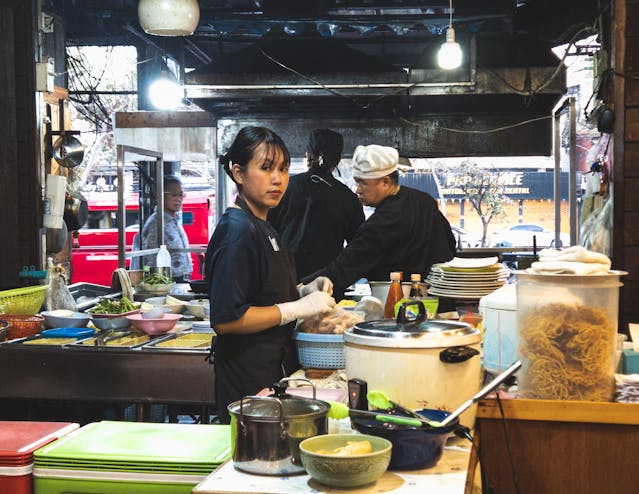
The city that built its reputation on being perpetually cheap now ranks as the 90th most expensive city in the world for expatriates. Over the past five years, Bangkok has climbed more than 80 places in the ECA International cost of living survey, propelled by a strengthening baht, economic expansion, and a stabilized political landscape. Yet simultaneously, digital nomad rankings crown Bangkok the second cheapest city globally for remote workers, with average monthly costs hovering around $1,200. A meal from a street cart still costs 40 baht. A signature cocktail atop a 50 storey hotel sets you back 600.
Cheapest. Most expensive. Both statements are true. Neither tells the full story.

The Price of Arrival
Walk the 300 meters from BTS Thong Lo into the grid of sois that branch off Sukhumvit 55. On one side, grandmothers grill pork skewers over charcoal braziers, the smoke curling past 7-Elevens and old shophouses. On the other side, glass towers rise with names like The Monument and SCOPE, where private lift lobbies usher residents into units priced at 39.5 million baht and up. A two bedroom suite at SCOPE Thonglor rents for 450,000 baht per month roughly $13,000, more than the annual salary of many Bangkokians.
This is not gentrification in the Western sense, where displacement follows property values. Bangkok has always lived this way: the hyper wealthy and the striving poor stacked vertically, separated by a security guard and an air-conditioned lobby. What has changed is the volume. The Sukhumvit corridor now hosts more cranes than any other Southeast Asian capital, and the buyers aren’t just oligarchs from China and Russia. They’re young Thai professionals, queer couples pooling resources for a condo with a shared name on the deed a right only secured in January 2025, when marriage equality finally became law.
The legal victory was historic. Thailand became the first Southeast Asian nation to legalize same sex marriage, and the first country in the region to guarantee equal rights regardless of gender or sexual orientation under a unified marriage law. But ask any activist in the room when the champagne popped, and they’ll tell you the truth: a marriage certificate doesn’t fill a refrigerator.
The Gap Between the Law and the Sidewalk
In March 2026, on International Transgender Day of Visibility, the Thai government and a coalition of 47 partner organizations launched the National Health Charter on Transgender’s Wellbeing. The document, five chapters long, lays out a public policy framework addressing legal gender recognition, healthcare access, education, employment, and social welfare. Nachale Boonyapisomparn, chair of the Committee on Public Policy Advancement for Transgender Persons, helped draft it alongside civil society groups. “While Thailand is open to transgender and gender diversity,” she said at the launch ceremony, “many transgender people still face various forms of discrimination in daily life”.
The charter does not carry the force of law. It is a framework, a promise, a document signed by 200 witnesses including the Irish ambassador to Thailand. Under current statutes, trans Thais still cannot legally change their gender on identification documents. A woman who has lived as a woman for decades remains legally male at birth in the eyes of the state, a vulnerability that affects everything from employment applications to interactions with police. A proposed Gender Certification Act, developed by Thammasat University’s law and social administration faculties, would change this. But it has not yet reached the legislature, and support remains fragmented.
“Some still believe that men dominate society, therefore the general acceptance is not as good as it should be,” Chartthai Pattana’s Udomsak Srisutthiwa told a rally in April 2026, where hundreds gathered to demand full equality. The crowd carried rainbow flags and homemade signs. They also carried the weight of knowing that Thailand’s reputation for tolerance earned, in part, by the visibility of kathoeys in beauty pageants and television commercials has always been a shallow measure of lived experience.
Economic data bears this out. A World Bank report found that discrimination remains prevalent when LGBTQI people look for jobs, access education and healthcare, buy or rent properties, and seek legal protection. The market offers opportunities for some Thai gay men—particularly those with capital and connections—but it also erects barriers for those without. Bangkok’s cheapest expensive paradox is not just about money. It is about who gets to cash in.
The Spaces In Between
Silom Soi 4 has anchored Bangkok’s queer nightlife since 1967, when the Sea Hag opened its doors. The small lane, originally called Soi Jaruwan or Soi Kathoey, grew from one or two bars into one of Southeast Asia’s most concentrated LGBTQ+ districts. Tonight, the street hums with a familiar rhythm: tourists from Taipei and Berlin rubbing shoulders with local office workers, drag queens adjusting their lashes outside Telephone Pub, the low thrum of bass escaping from DJ Station.
But something has shifted. Look past the well worn bar fronts, and new spaces are rewriting the script. HORN, a queer run underground club on the fourth floor of a Silom Road building, describes itself as a “raw, bunker style club” with a Berlin basement sensibility. Moody lighting, stripped back industrial edges, crowds drawn by sound rather than spectacle. It is not the Bangkok of rumored legend. It is the Bangkok of right now: sophisticated, self determining, uninterested in performing for the tourist gaze.
Further north, across multiple venues including the Bangkok Art and Culture Centre and the Goethe-Institut Thailand, H0M0HAUS #3 will take place from June 5 to 14 2026. The festival’s theme, “The Last: Radical Reincarnation,” centers on renewal after rupture. “It traces what happens when silence breaks,” the organizers explain, “when something once suppressed finds its voice again”.
These spaces matter not because they are safe though they largely are but because they are casual. The ability to exist without explanation, to flirt without calculation, to plan a future with a partner’s name on a lease: this is the infrastructure of ordinary life. Bangkok supplies it unevenly, but it supplies it.
The Month Ahead
For those watching Bangkok’s queer cultural calendar, May and June 2026 bring several events worth attention. Pride Show Bangkok transforms BITEC Live into an exposition of drag, performance, and community programming over multiple days. HORN continues its programming of curated DJ nights and alternative social events, with updated schedules available through local listings. The Bangkok Art and Culture Centre maintains its year round calendar of contemporary exhibitions, many of which engage with gender and sexuality without fanfare.
Practical note: Bangkok’s BTS and MRT systems remain the most efficient ways to navigate the city. Sala Daeng station deposits passengers a short walk from Silom Soi 4; Thong Lo station serves the Sukhumvit corridor’s luxury condos and independent cafes. The city’s Grab and Bolt apps work reliably, and the motorbike taxis that swarm every intersection are the fastest way to move during rush hour. Wear a helmet and negotiate the fare before you swing your leg over.
Where the Parallel Lines Meet
Late afternoon in Lumphini Park. Monitor lizards slide through the main pond, indifferent to the joggers. On a bench near the Silom entrance, two women share a container of mango and sticky rice. They are in their early 30s; one wears a bank’s polo shirt, the other carries a canvas tote from a local bookstore. They finish their snack, consult a phone, and walk hand in hand toward the MRT station. No one photographs them. No one remarks.
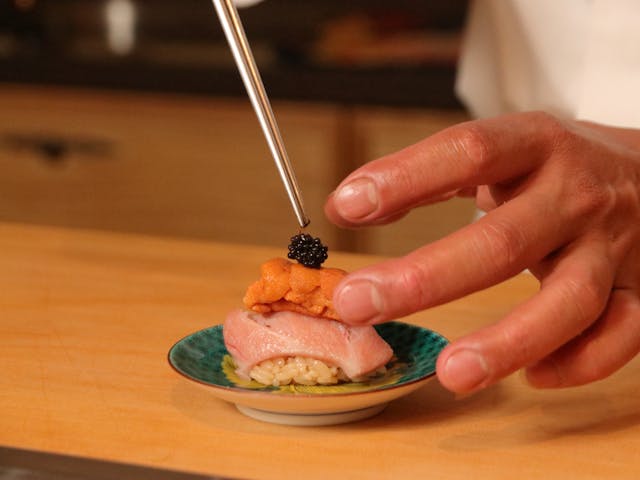
This is the Bangkok that the rankings miss. The city where a 30 baht boat noodles lunch sits across the street from a 30,000 baht tasting menu. Where a transgender university student helped draft a national health charter in the same year her government still won’t let her change her ID. Where 47 organizations signed a document promising safety and dignity, and then went back to work because the document was only the beginning.
Bangkok is the cheapest most expensive city because it contains multitudes that cannot be flattened into a spreadsheet. It costs exactly what you can afford. It costs exactly what you cannot. And for the queer people who live here who build lives in the gaps between the data points the price of belonging has always been measured in currencies that no survey tracks.
- SourcECA International Cost of Living Survey 2026, as reported by Coconuts Bangkok, April 2026
- Life in Armenia magazine digital nomad affordability ranking, February 2026, as reported by Scandasia
- DDProperty.com listings for The Monument Thonglor and SCOPE Thonglor, April 2026
- Central News Agency (Taiwan) coverage of LGBTQI issues in Thai elections, February 2026
- Central News Agency coverage of Thailand’s Transgender Wellbeing Charter launch, March 2026
- Coconuts Bangkok report on proposed Gender Certification Act
- Coconuts Bangkok report on Bangkok Pride rally and Udomsak Srisutthiwa quote, April 2026
- National Health Commission Office of Thailand, “Thailand Launches First-Ever National Health Charter on Transgender’s Wellbeing,” March 2026
- World Bank Economic Inclusion of LGBTI Groups in Thailand report (cited via multiple academic catalogs)
- APCOM coverage of Silom Soi 4 as a queer community district
- Star Observer historical coverage of Silom Soi 4 development
- Island magazine reference to Sea Hag opening (1967)
- Pride Thailand venue profile of HORN, April 2026
- Time Out Bangkok listing for H0M0HAUS #3, April 2026 (event dates June 5–14 2026)
- Wikiwand/Patpong entry for Silom Soi 4 history
- DD Property and LivingInsider listings for Thonglor luxury condominiums, April 2026
- Thai PBS via Coconuts Bangkok for regional cost of living comparisonses